Category: Uncategorized

  • DIY Junk Style

    DIY Junk Style

    Homemade, aggressively rinky-dink art and fashion were pretty cool. I used to go around in an old hand-me-down London Fog raincoat with the Flipper logo painted in day-glo tempera paint on the back. Some people used to make their own clothes. A lot of the aesthetic was trash- and refuse-related. None of this beautiful, polished, “reclaimed materials” vibe you see today.

    There were a lot of “art cars” in San Francisco. It was not too unusual to see a car with a homemade paint job, say, done up in stripes, checks, or leopard spots; or one with toys or pieces of junk metal glued all over it. I remember one that was coated with thousands of sea shells, and another one covered with baby doll heads.

    The junk aesthetic was a key part of SRL’s nightmarish constructions. Not only did they reuse scrap metal, litter, and garbage, they would sometimes use roadkill in their machines–literally dead animal carcasses.

  • Parking

    Parking

    There was a kind of Wild West situation with parking in the city. Even though the population of San Francisco was smaller then, there were more cars per household. These days, single families often occupy entire houses that would previously provide two or three separate rented flats, each holding a few renters apiece. So a few decades ago, the car count for a house might have been six or eight instead of just one or two now. Cars were cheap, taxis were unreliable, and public transportation in SF has never been great. (It’s nothing like New York: here, trains here only go to certain neighborhoods, and bus service has always been a little lame especially in the evenings).

    In more crowded neighborhoods like the Haight, if you drove home late at night, there’d often be nowhere to park. So people would park on sidewalks, or on street corners. Double-parking for extended periods of time was not unusual. I used to get a parking ticket like once a month, then after a few of them would pile up, I’d go down to the Hall of Justice and protest. I’d tell the judge I was a scrub making $15k a year and she’d cut the bill in half. Fortunately rent was like $250 a month, so parking tickets were regarded as just part of the cost of doing business.

  • Roommates

    Roommates

    Most people I knew in the 1980s moved a lot. My first few years in the Bay Area I changed addresses about twice a year. It was kind of fun because most residents here were located on a personality spectrum somewhere between oddball and completely insane, so you got a lot of different and unique perspectives. Of course this was before the internet flattened everybody out into a handful of groupthink camps.

    In San Francisco, when you wanted to look for a new place to live, you could ask around, or look for ads in the local paper. Or…you went to a place in the Haight called Roommate Referral. This was a crappy little office where you could page through a couple of 3-ring binders with available housing opportunities. These were usually a single flat, or sometimes an entire Victorian house, looking for one or more people to share rent and utilities. I remember one time seeing a listing for a room in the “Kennle Club District”—meaning it was located near a punk venue called the Kennel Club, now known as The Independent—written in a strange kind of tiny scrawled handwriting. Whoever had filled out the form had listed some requirements for a roommate, like: you had to be okay with drug abuse, noise, etc. Then I saw it was signed by Michael Dean, singer for the legendary acid/horror/postpunk band known as Bomb.

    I didn’t visit the “Kennle Club” flat, but I did check out a spot in the Inner Richmond that sounded promising. I called the guy up to schedule a visit, and he sounded pretty normal, though he did let me know that there was a dolphin tank in the flat. I asked him if it was baby dolphins? and he said no, it’s a full-grown dolphin. I didn’t really think about it, so I just said yeah, sure, fine. When I went to get a tour of the flat, the guy took me through the place, then we went up to the roof. He gestured to the open space in front of us and said, “well, here’s the dolphin tank.” I asked him, oh was this like a test or something? And he just smiled at me and said nothing. I don’t think either one of us followed up after I left.

    The first place I rented in the Bay Area was actually really nice. The front door didn’t have a working lock, which is wild considering it was in Oakland. Anyway one of my roommates had a habit of leaving her bloody tampons in the bathroom trash can, then her dog would come in and rip them up and scatter them around the floor. So one day the other roommate swept up all the bloody shreds into a pile in front of her door. She got pretty mad at that. When our lease was up and we all moved to new places, I think he might have stolen her TV.

  • Survival Research Labaratories

    Survival Research Labaratories

    If someone asked me “what was the most San Francisco thing in the 1980s?” I might have to say “Survival Research Labs.” Describing what they were is tricky, but maybe: a collective of artist/engineer/mad genius/mischief-makers led by a guy named Mark Pauline. They constructed elaborate, brutal, surrealistically violent machines, and staged public performances where the machines paraded around, attacked one another, and threatened or terrorized the audience.

    The machines were generally made of steel, sometimes adorned with roadkill, paper or canvas or other “skins,” and might resemble human or animal forms, but just as often looked military. In fact I believe they “borrowed” a lot of their raw materials from military sources. The scale of these machines grew to an impressive size, some as big as twenty feet tall or larger, and were almost always animatronic—either remote-controlled, or running on some kind of programmed loop. Two kinds of motion were commonly designed: some way of moving around the arena, and some kind of attacking mechanism, like a claw.

    This might sound like SRL was just a precursor to the popular kid-friendly TV series “Battlebots,” and it’s possible it did directly inspired that show (not to mention robot-building as a niche American hobby), but SRL events were never about competition. They were conceived and executed squarely in the realm of performance art—done in the confrontational style of the 1980s—as a critique of modernity. If anything, the machine performances were anti-competitive, laying bare the ugly, horrific side of late-stage capitalism, neoliberalism, consumer culture, and other neat features of modern life.

    Before moving to San Francisco, I was aware of Survival Research Labs through underground press publications (e.g. the Re/Search issue on Industrial Culture). But by the time I got here in 1988, their performances were starting to wind down, so I only had the privilege of seeing them live twice. The first one was staged under the 101 freeway overpass, with a chain-link perimeter fence erected around a several-blocks-long area. Tickets were sold to the event, but it sold out pretty quickly, so we had to find a vantage point for viewing from outside the fencing. I think maybe we were standing up on the roofs of some cars that were parked nearby.

    I don’t know if SRL pulled permits for this event, but if so, I have absolutely no idea how they got them approved unless it was through bribes. Numerous grand pianos had been hung by steel cables from the bottom of the overpass, 100 feet above the arena. The machines started attacking each other and making a lot of noise. One of the machines was a sound cannon that would patrol the area, take aim at spectators and fire a massive sonic boom at people’s faces. At some point, a large quantity of oil was spilled on the ground and ignited, probably on purpose, causing a giant conflagration. Guys were running around on the ground with remote-control devices and walkie talkies and fire extinguishers as the metal monsters lurched and swung at each other. It really seemed like somebody was going to get very badly hurt. Amazingly, I don’t recall seeing any police or fire department presence at any time.

    There is just no way that anything remotely resembling this kind of event would be doable today. You can see some highlights of that event and others on YouTube.

  • Local Eccentrics

    Local Eccentrics

    The most famous local eccentric from San Francisco in the late 20th century was probably Jim Jones—a little before my time, but back in the day, he founded a cult-like church, moved the congregation to Guyana, and convinced the entire flock to commit mass suicide by poisoning. Another notable personage was Anton LaVey from the Church of Satan. When I moved to San Francisco, his house in Pacific Heights was still painted all black, although I’m not sure he was still living there.

    During punk rock’s heyday in the 1980s, the most well-known local weirdo was Frank Chu, who would devise bizarre, surrealistic protest signs and hold them up in public for hours on end. He was sometimes known as “the 12 Galaxies guy,” because his messages often contained cryptic references to 12 Galaxies. Frank would often post up in the financial district, which was particularly amusing given the absurd, paranoid-schizophrenic nature of his messages.

    And speaking of cryptic, experimental rock pioneers The Residents used to live at 666 Grove Street. (Coincidentally, I also had a friend who lived at 666 O’Farrell.) Unrelated to The Residents, there was a woman who used to wear all white, cover herself in blinking LED light strands, and set up her cheap synthesizer next to ATMs and play strange original tunes. I don’t know if she was busking; I don’t remember seeing anyone give her money.

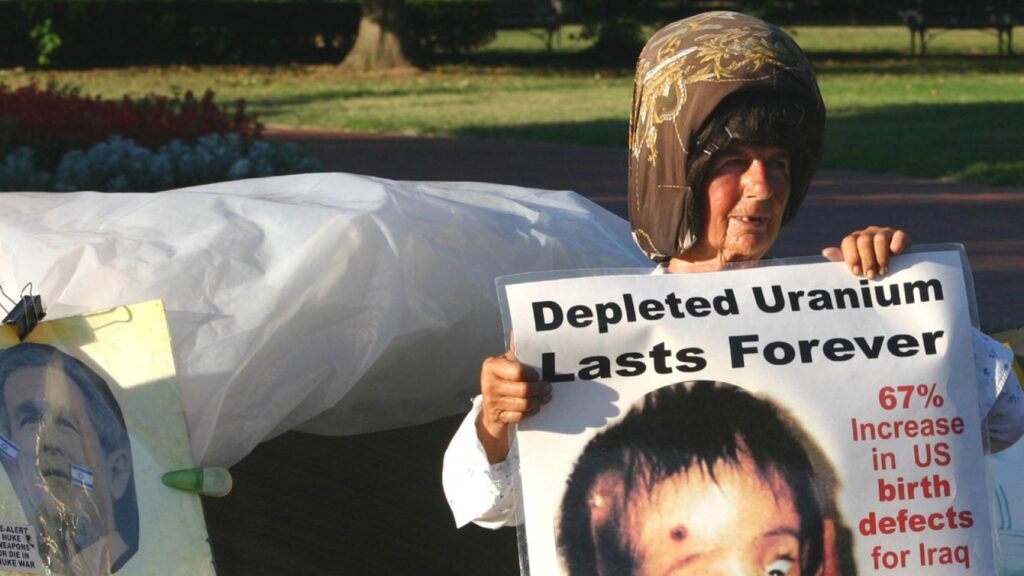
    Thinking about Frank Chu reminds me that when I was a teenager in Washington, DC, a lot of us were terrified of a notorious, rarely-seen specter known as The Cabbage Head Lady. A few people I knew had claimed to have seen her. But I never did, so for a while I thought maybe it was a hoax. Then one day I got on a bus and there she was, standing right in the aisle. A fully-stuffed dark green trash bag was balanced on top of her head, obscuring her entire face except for her downturned mouth. Around her neck, hanging on a string necklace, was a framed photo of diseased bodies. My blood ran cold. In her hands she had a stack of xeroxed flyers with some kind of conspiratorial information. Much later I did some research and believe with about 55% confidence that the woman was named Concepcion Picciotto. No idea if she’s related to Guy Picciotto from Fugazi. The images of Concepcion still on the internet always show her with a large head covering, although none of them were as disturbing as the full “cabbage head” trash bag which I saw in person.

  • Weird Bars

    Weird Bars

    There used to be a notorious cocktail bar on Haight Street called the Persian Aub Zam Zam Room. The bartender was a cranky old guy named Bruno. When you walked in, he’d size you up and if he didn’t like the looks of you, he’d simply refuse to serve you. Sometimes he’d make up an excuse like “there are no more seats” when the place would be totally empty. He’d also turn on you if you ordered the wrong drink, like, say, a Sex on the Beach or a vodka martini. I only drank there twice, and both times ordered a martini dry, once with olive, and once with glass onion, and he didn’t kick me out. But I saw him turn away some preppy looking kids who seemed tentative, and that fearful vibe clearly triggered old Bruno.

    In another bar on Lower Nob Hill, the owners had set up a bed frame and mattress right in the bar for the owner’s elderly mom/grandma to sleep in. The bed was actually pretty close to the entrance, so when you walked in, on the left was the bar and on the right was this old lady lying in bed. They’d hung a TV from the ceiling so she could watch it all day. She never paid any attention to anyone who came in the door.

    A not-weird bar was the Nightbreak (also in the Haight, where Amoeba Records is located now). It was sort of the CBGBs of San Francisco at the time. I only mention it because I saw the Melvins there with about 8 other people.

  • Pre-internet surf reporting

    Pre-internet surf reporting

    Today, if you’re trying to decide whether or not to go surfing, you can go on the internet and get detailed current conditions for just about every popular surf spot on earth. Many locations have live web cams. Surfline tells you in advance not only what day of the week, but what time of day it thinks the waves will be best in each area. So what did surfers do before the internet?

    Of course, you could just load up your car and head to the beach to check it in person. But that takes time. And at Ocean Beach in San Francisco, conditions can and do change pretty rapidly. So a more informed, targeted approach was obviously preferable for people who didn’t live close to the beach.

    One method of getting information was to call up someone you knew who lived near the beach. But unless that person was a really good friend, you couldn’t be doing that every day, especially when scores of other people would be trying the same tactic. And if the waves were good, your contact may have been already in the water.

    Wise Surfboards used to do a recorded phone message describing current conditions and tides every day. But they would only post it at around 10 am, giving a nice 3-hour cushion for people who had already paddled out earlier. You could call the shop directly, but if they didn’t know you, they’d be evasive, or say “this isn’t the surf report line,” etc. If Glenn answered and you asked him for a surf report, he’d just hang up on you.

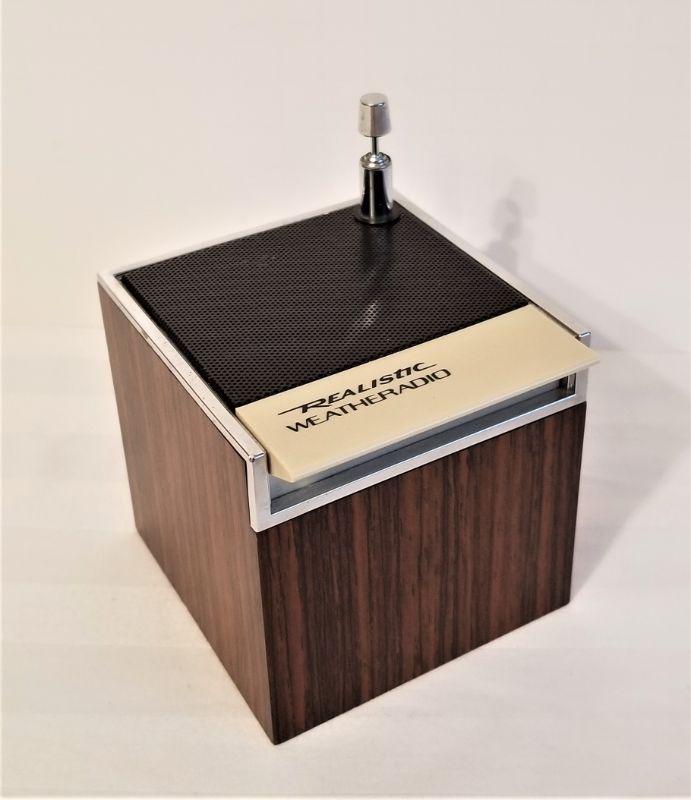
    So many of us ended up having to do our own surf forecasting. My two main tools were a printed tide chart and a Radio Shack weather radio (I still have mine!) Weather radios broadcast a recorded message, updated every few hours, and still running to this day, featuring a monotonal voice reciting NOAA buoy readings, winds, and forecasted sea conditions. This entire program was really geared towards boaters, but a lot of surfers knew about it. I remember going to bed with the weather radio next to my ear, and when the offshore buoy, or particularly the Point Arena buoy gave a reading with a wave period of 16 seconds or greater, I’d have a hard time sleeping that night.